
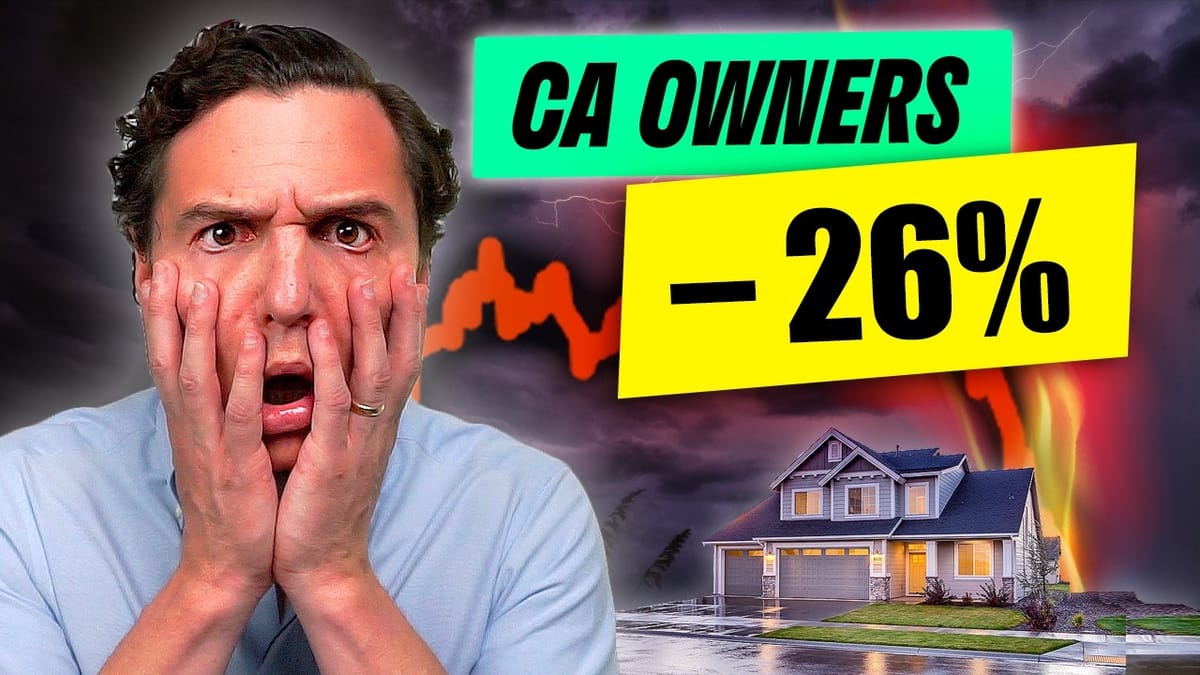
California's homeownership rate just dropped, on paper, from 55.9% to 41.2%. The owners are the same. The Minneapolis Fed just counted them a better way, and the new count is a lot more honest.
My name is Jon Schwartz. I've been a California homeowner for 17 years and a California Realtor for six years, and the report I'm covering in this article genuinely surprised me.
Watch Now
Watch my full video on this topic below, or watch it on my channel instead.
The Old Count
The US Census Bureau tracks something it calls the "Homeownership Rate", and right now that number sits at 65% nationally. But the name is misleading. What the Census Bureau actually counts is houses, not people: the percentage of homes, or "households" in its own language, that are owner-occupied.
A Better Count
The Federal Reserve Bank of Minneapolis just published a report called "New Homeownership Measure Puts People First", and it does exactly what the title says: it counts people instead of houses. That single change moves the national homeownership rate from 65% down to 53%.
Two Households
Here's an example: picture two homes. Home #1 is owned by a married couple, Ross and Rachel, and Rachel's retired parents also live there. Home #2 is owned by another married couple, Lucy and Ricky, and their two adult children, ages 20 and 23, also live there.
By the old method, that's a 100% homeownership rate: both homes are owner-occupied. By the new method, it's 50% because only four of the eight people living in those two homes actually own the place they live in.
California's Real Number
California already had the second-lowest homeownership rate in the country under the old method at 55.9%, behind only New York. Under the new method, called the homeownership-to-population ratio or "H-Pop", California falls to 41.2%. That's the lowest true homeownership rate of all 50 states.
The Missing Quarter
That's a downward revision of 26%. Put plainly: for every four California homeowners we used to count, one of them wasn't actually a homeowner. They were a parent, an adult child, or an adult roommate living with someone who owned the place.
Nationally, the single largest group behind the gap is adult children living with their parents because they can't afford rent, let alone a mortgage. They make up about 8.5 percentage points of that old 65% figure.
Why Prices Hold
This matters because it changes who the housing market actually needs to keep working. A lot of real-estate YouTubers predict a crash because home prices are rising faster than the median income. That argument only holds if you need the median earner to be able to buy a home in order to absorb the supply on the market.
But California doesn't need its median earner to be able to afford a home. It only needs its top 41.2%.
The Bureau of Labor Statistics breaks down California incomes by quintile, so you can see exactly what that means. The average California household, or "consumer unit" in BLS language, earned $116,000 at the time of the survey. The top 20% of earners average $293,000, and the quintile below that averages $131,000. Combine those two groups and you have the top 40% of California earners. Their average household income is $212,000, about 83% more than the average California household.
That top 40% is holding up California home prices, not the median household.
The Real Move
If you already own a home in California, congratulations: you're living in an excellent long-term investment.
If you're planning to buy in the next few months or years, California real estate is a luxury purchase now, and every dollar you keep out of an agent's pocket matters more because of it. Don't hand $25,000 or $40,000 of your purchase to an agent who barely earns it.
Conclusion
The census number measured the wrong thing: houses instead of people. Now that the count is honest, California has the lowest homeownership rate of any state in the country, and the market runs on the top 40% of earners, not the middle.
Read more on this topic: the 4 most expensive mistakes California home buyers make.